



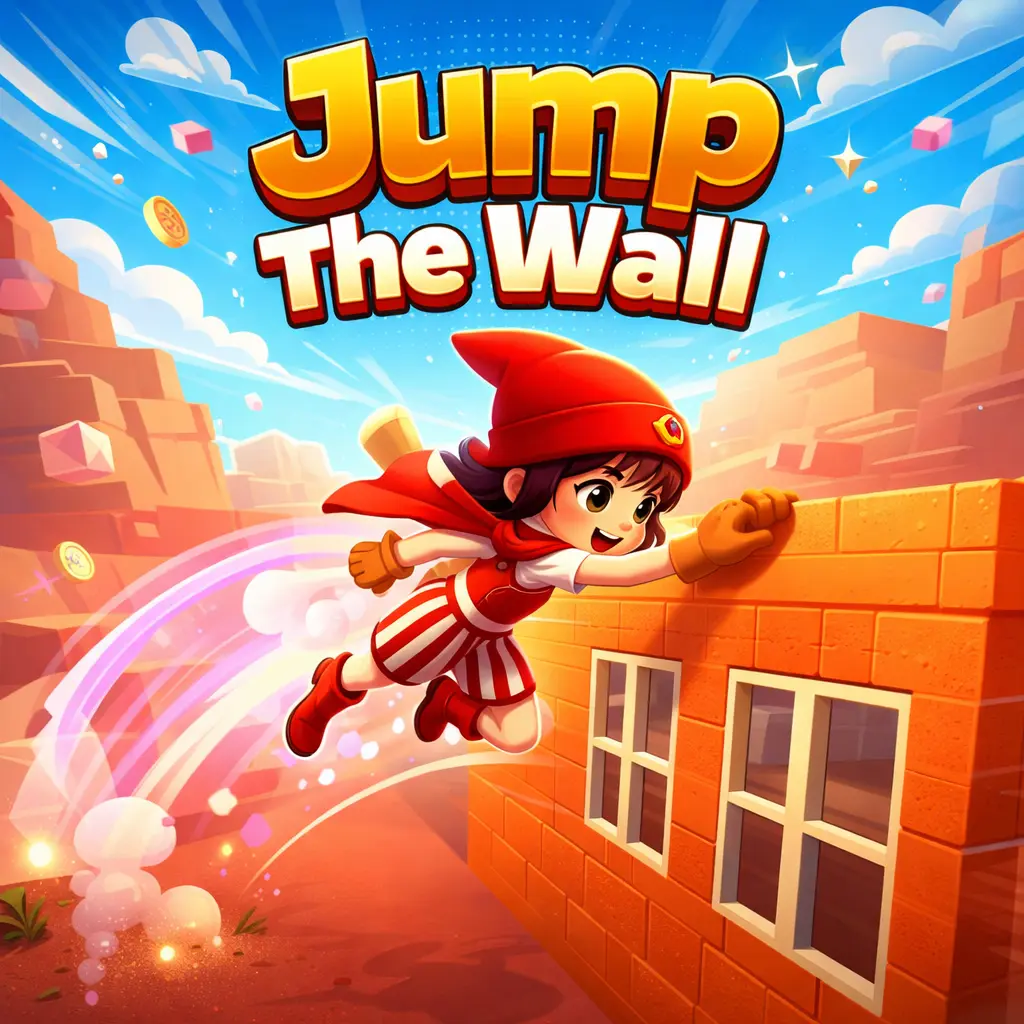

Jump The Wall is a fast-paced obstacle racing game where you control a runner who must jump over walls at the right moment to maintain speed and beat opponents.
Unlike endless jumping games that focus on vertical movement, this game is built around forward momentum and timing precision. Every jump directly affects your speed, and even a small mistake can cost you the lead, making each decision feel important.
Gameplay Mechanics and Difficulty Design
Jump The Wall is structured around short competitive runs where your main objective is to stay ahead by clearing obstacles efficiently. The character runs automatically, so your only responsibility is deciding when to jump. This design removes unnecessary complexity and places full emphasis on timing and reaction.
What makes the game interesting is how it punishes mistakes. Hitting a wall does not immediately end the run, but it slows your character down significantly, creating a recovery scenario rather than a reset. This keeps the gameplay continuous while still rewarding precision.
As levels progress, obstacle patterns become less predictable. Walls vary in height, spacing, and rhythm, forcing you to read the track ahead instead of reacting at the last second. This transforms the game from a simple reflex challenge into a pattern recognition exercise.
Core Mechanics Breakdown
- Automatic running keeps gameplay fast and focused
- Jump timing directly affects speed and ranking
- Collisions cause slowdown instead of instant failure
- Level design introduces increasing complexity
- Visual spacing between obstacles acts as timing cues
Strategy, Timing, and Player Improvement
To perform well in Jump The Wall, players need more than quick reflexes. The key is learning how to read distance and rhythm. Jumping too early or too late both result in inefficiency, either losing speed or hitting the obstacle. The most effective approach is to anticipate rather than react.
Momentum management is another critical factor. Maintaining a smooth sequence of jumps allows your character to stay ahead without interruption. Once momentum is broken, catching up becomes much harder, especially against AI opponents that maintain consistent pacing.
Over time, players begin to recognize patterns in obstacle placement. This creates a learning curve where improvement comes from experience rather than randomness. The game subtly rewards players who stay calm and observe instead of rushing decisions.
Performance Optimization Tips
- Focus on rhythm instead of reacting randomly
- Watch obstacle spacing to predict jump timing
- Avoid panic jumps when approaching multiple walls
- Maintain momentum to stay competitive
- Practice to build consistent reaction timing
Why Jump The Wall Stands Out
Jump The Wall succeeds because it simplifies controls while deepening execution. The game does not overwhelm players with mechanics, but it demands precision in every action. This balance creates a satisfying loop where improvement feels noticeable after each run.
The competitive element adds another layer of engagement. Racing against opponents makes every mistake more impactful, while clean runs feel rewarding and efficient. Combined with quick matches and increasing difficulty, the game keeps players engaged without becoming repetitive.
FAQs
How do you play Jump The Wall?
You control a character that runs automatically and jump over obstacles using a key press or mouse click. The goal is to avoid collisions and maintain speed to finish ahead of opponents.
What happens if you hit a wall?
Hitting a wall slows your character down instead of ending the game, which gives you a chance to recover but makes it harder to win.
Is Jump The Wall difficult?
The game starts simple but becomes more challenging as obstacle patterns become faster and less predictable, requiring better timing and focus.
What is the main skill needed?
Timing is the most important skill. Players who can consistently judge distance and jump at the right moment will perform much better.
Jump The Wall is a strong example of how a simple mechanic can create a skill-based and competitive experience. If you enjoy games that test timing, rhythm, and consistency, this is a title that will keep you improving with every run.